
If you are planning to build a home on land that is not connected to a municipal sewer, there is a step that catches a lot of people off guard: the septic system has to be permitted before the building permit can be issued. That makes the septic plan one of the first real decisions in a new-home project, not something to sort out near the end.
This guide walks through what goes into a septic permit, why the soil on your lot drives the design, and how to keep the permit from becoming the thing that holds up your build. It is written for homeowners, builders, and developers in El Paso, Douglas, Teller, and Elbert Counties.
The Rule That Surprises New-Home Builders
When a property will use its own septic system, you cannot get a building permit until you have a septic permit. In other words, the septic system is not an afterthought you add once the house is designed. It is a gate the project has to pass through first.
That is one reason we encourage people to reach out early, even before the house plans are final. The earlier the septic work starts, the less likely it is to hold up everything behind it.
What Goes Into a Septic Permit
A septic permit is not a form you fill out in an afternoon. It is built from information about your specific property. Here is the sequence we follow:
- Talk and site visit. We learn about the property and your plans, answer questions, and look at the site.
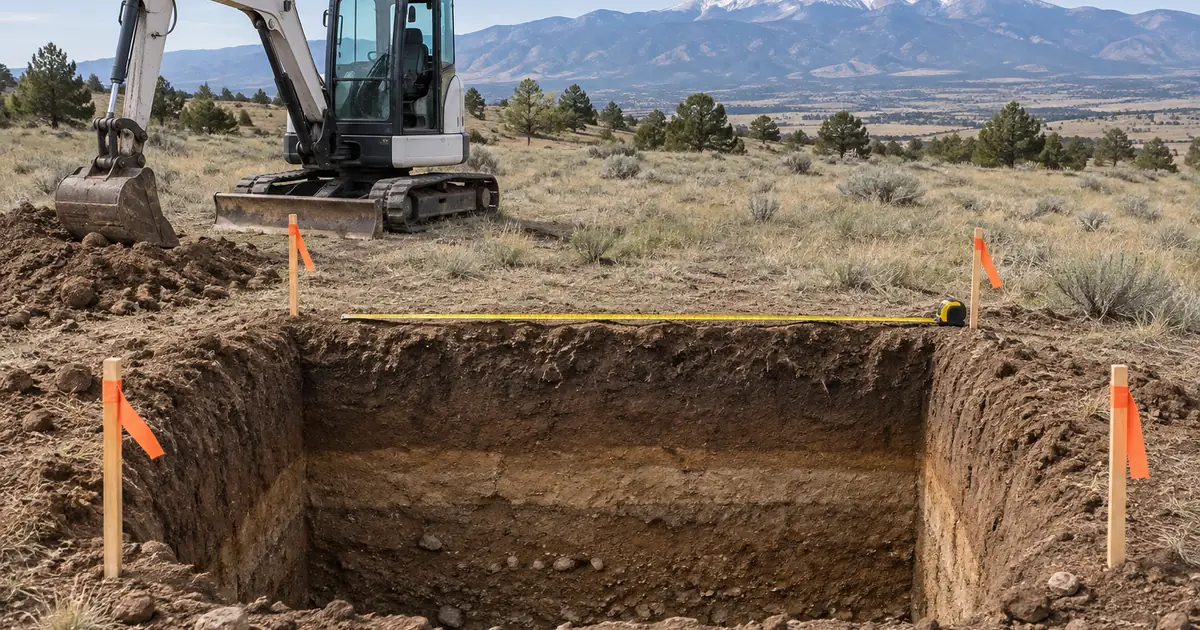
- Profile pits. We dig profile pits to see what the soil is actually like where the system would go.
- Soil analysis. What the pits show is turned into a soil analysis. The soil drives the design.
- Engineered plan. The soil analysis becomes an engineered plan for your system.
- A bid on the plan. You get a bid based on the plan, so you can see what the system involves before you commit to it.
- Plan submittal and permit. We send the plan to the county and work through the permit so you can move ahead with your home.
If you already have a soil test or a permit in hand, tell us. Some people arrive with part of this done, and some are starting from scratch. Either is a normal place to begin.
Why Two Similar Houses Can Need Very Different Systems
It is tempting to assume that a septic system is sized by the house alone. Two homes of the same size can end up with very different systems because the dirt under them is different. The soil is what determines how the system has to be designed, which is why the profile pits come before the plan and not after it. A neighbor's system tells you very little about what your lot will need.
How Long Does the Permit Take?
Plan on it taking a while. In the main county we work in, a septic permit typically takes four to six weeks, and it can run longer than that. Timelines are different from one county to the next, and they change over time, so treat that as a planning figure and not a promise for your property.
The practical takeaway is simple: if you want to break ground on a home in a particular season, work backward. The permit comes first, and the permit starts with soil work and a plan. Starting those steps early is the single best way to keep the septic system from setting your schedule.
Who Handles the Paperwork
Colorado sets statewide rules for onsite wastewater systems, and the permit itself goes through your county. Counties can have their own requirements on top of that, so the process is not identical everywhere. We prepare the plan and submit it to the county for you, so you are not left finding your way through the permit office alone. If you are a builder or developer handling several lots, the same steps apply to each one, because each lot has its own soil.
Surprises We Look For Before the Plan Is Final
A permit plan has to work on the real property, not just on paper. Things that are easy to miss until someone walks the lot can change where a system can go. Here is an example of the kind of surprise that comes up: a system is planned for one spot, and then a cistern the owner did not know about turns up, and the system has to be 100 feet away from it. Catching something like that on a site visit is far better than finding it after a plan has been submitted. That is part of why we walk the property with you before the plan is finalized.
What to Have Ready When You Reach Out
- The property address and which county it is in
- Whether you already have a permit and a soil test, or are starting from scratch
- Whether you are building a new home or adding a system to an existing property
- Your timeline, including when you hope to start building
- Anything you know about the property, such as wells, cisterns, or other buried items
Where We Work
Colorado Septic Pros serves El Paso County, Douglas County, Teller County, and Elbert County. You can read more about septic system installation, or check our FAQs. If you are getting ready to build, send us a message and we will help you work out the next step.