
A complete septic system install, a new tank and a new leach field, is the work Colorado Septic Pros does more than any other. Whether you are building a new home or putting in a system on a property that never had one, we guide you through the whole path: profile pits, soil analysis, an engineered plan, the county permit, and the installation itself.
Why the Septic Comes First on a New Home
If you are building a house outside municipal sewer service, the septic system is a bigger part of the project than most people expect. You cannot get a building permit until you have a septic permit, so the septic plan has to be settled early. We help you get that done so your build is not waiting on it.
How a New Septic Installation Works
Every install follows the same path, and we walk you through each step so you always know what comes next:
- Talk and site visit. We learn about your property and your plans, answer questions, and look at the site.
- Profile pits and soil analysis. We dig profile pits to see what the soil is actually like where the system would go. The soil drives the design.
- Engineered plan. The soil analysis is turned into an engineered plan for your system.
- A bid on the plan. You get a bid based on the plan, so you can see what the system involves before committing to it.
- Plan submittal and permits. We send the plan to the county and work through the permit so you can move ahead with your home.
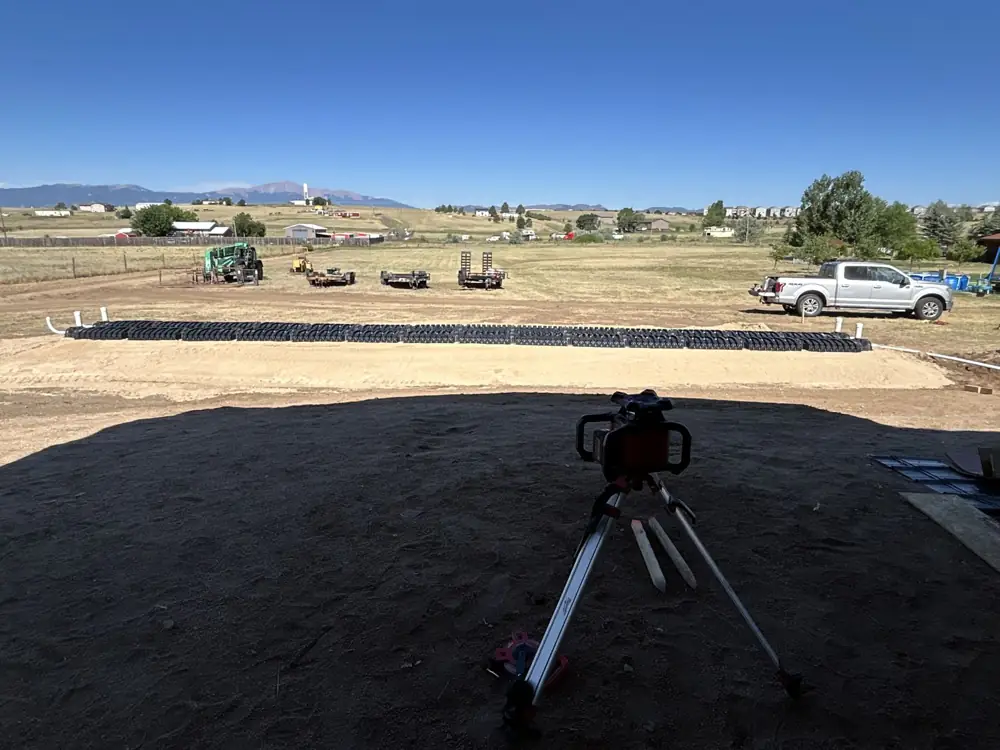
- Installation. Our crew installs the tank and leach field to the approved plan.
Placement Is Thought Out From the Homeowner's Side
You are the one who will live with this system, use it, and maintain it. Where the tank and leach field go affects your yard, your patio, and how the property feels. We plan placement the way a homeowner would, not just the way a contractor would, so you are not left staring at your septic system from the back patio every day.
Surprises also come up on real properties. An unmarked cistern, a well, or a setback requirement can change where a system can go, and sorting those out early is part of the job.
A System Built to Last Without Over-Engineering It
Our goal on every install is a system that lasts as long as possible, costs as little as possible, and needs as little maintenance as possible. We do not want to over-engineer something that costs more than it ever pays you back. If a simpler design meets the requirements for your property, we will tell you.
After the Install: How to Use Your New System
A septic system works best when it is used the right way. Part of what we do is explain how to use and care for your new system so you avoid short-term, expensive problems down the road. If you have a concern or a question, we want you to feel heard and get a straight answer.
What to Have Ready When You Reach Out
- The property address and which county it is in
- Whether you already have a permit and a soil test, or are starting from scratch
- Whether you are building a new home or adding a system to an existing property
- Your timeline, including when you hope to start building
If you are not sure where you stand, that is fine. Send us a message through the contact form and we will help you work out the next step.
Where We Work
Colorado Septic Pros provides septic system installation across the four Colorado counties we serve, starting from our base in Peyton. Find your area below, or see our full service area page.
- El Paso County: Colorado Springs, Monument, Peyton, Falcon, Manitou Springs, Fountain, Cascade, Calhan, Ellicott, Yoder, Rush
- Douglas County: Castle Rock, Parker
- Teller County: Woodland Park, Cripple Creek, Divide
- Elbert County: Elizabeth, Kiowa
Frequently Asked Questions
You cannot get a building permit until you have a septic permit, so the septic plan comes early in a new home project. We prepare and submit the plan to the county for you.
A complete install means a new septic tank and a new leach field. Before that, we dig profile pits, do a soil analysis, and produce an engineered plan that goes to the county for permitting.
That is a common starting point. Profile pits, soil analysis, the engineered plan, and the permit submittal are all steps we handle.