
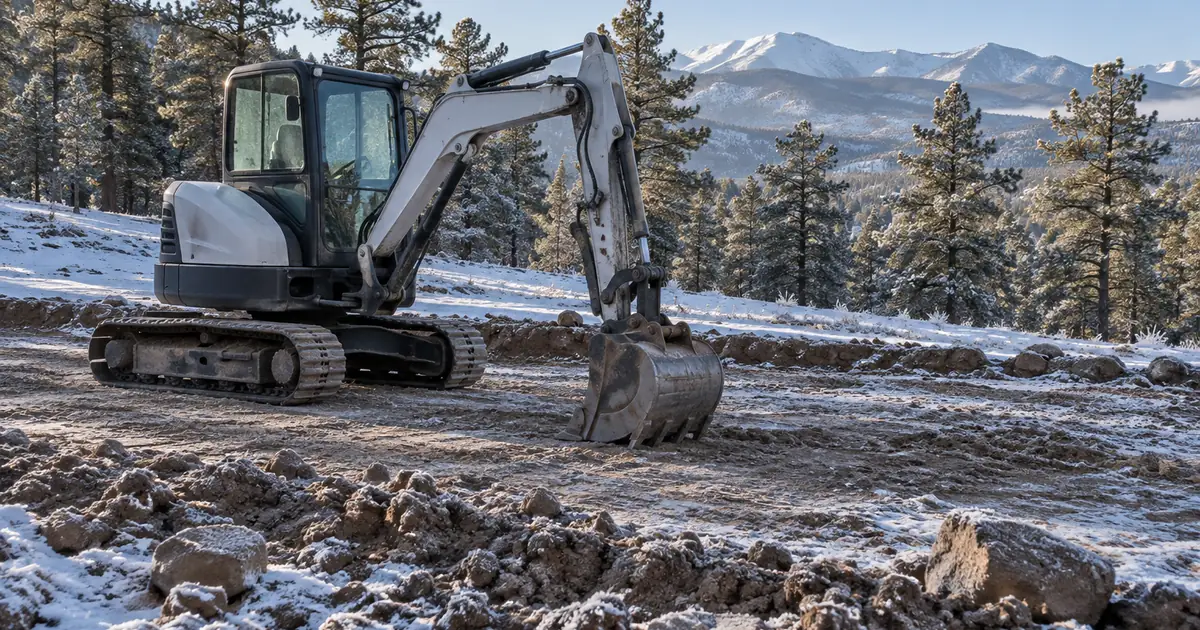
Septic installs and Colorado winters do not mix as easily as spring and summer do. When the ground freezes, digging gets harder, and that changes how a project should be planned. If you are thinking about a new septic system or a replacement, the fall is a good time to think about where your project falls on the calendar.
This guide covers what frozen ground does to a septic job, when the slower stretch typically hits, and how to plan so that winter does not catch you by surprise. It applies across El Paso, Douglas, Teller, and Elbert Counties.
What Frozen Ground Does to a Septic Install
A septic installation is excavation work. Trenches for the tank and the leach field, a place to set the tank, and the digging for the lines all depend on being able to get into the soil. When the ground freezes, that work gets much harder. That is the simple reason the winter months are slower for installs.
When the Slower Stretch Typically Hits
In our experience, December through February is the slower stretch for septic installs. Thawing typically begins to show up in March, and installs pick back up from there. It is a pattern, not a calendar rule. The weather decides, and it does not always follow the pattern. Last winter, for example, the ground never even froze, so there was no real winter at all. The next winter may not look like that, which is why we do not recommend planning around a mild winter.
Higher Ground Is Usually Colder
Conditions are not the same across our service area. Teller County is mountain country, and higher-elevation properties tend to see colder conditions than the plains in Elbert County or eastern El Paso County. If your lot is up in the mountains, it is reasonable to expect the cold season to matter more for scheduling.
Plan Around the Permit, Not Just the Weather
Weather is only one of the things that sets a septic timeline. The permit is another. In the main county we work in, a septic permit typically takes four to six weeks, and sometimes longer. And before the permit comes the soil work and the engineered plan. If you add those up and then add a freeze on top, a project that starts in late fall can quickly slide into spring.
If you are building a new home, there is one more reason to start early: you cannot get a building permit until you have a septic permit. We cover that in more detail in our guide to the septic permit process.
What You Can Do Before the Ground Thaws
- Get in touch early. A site visit, a conversation about what you need, and a plan do not have to wait for spring.
- Start the plan and the permit. If the plan and permit are done by the time the ground thaws, your project is ready to be scheduled as the season opens.
- Know where you stand. Tell us whether you already have a soil test or a permit. It saves time and avoids repeating work.
- Do not wait for a failure. A septic tank replacement or repair is easier to plan for on your terms than in the middle of a problem. If you are noticing slow drains, backups, odors, or wet or soft ground near the tank area, have it looked at sooner rather than later.
What If Your System Fails in Winter?
A failing system does not wait for good weather. If you are dealing with a problem now, contact us and tell us what you are seeing. We will tell you plainly what the situation looks like and what is realistic given the conditions, and we will not tell you something now that we cannot stand behind later. You can read about our septic tank replacement and septic repair services.
Planning a Spring Install
For many projects, the best approach is to use the cold months for everything that does not require digging: talking through the project, getting the plan together, and getting the permit submitted. Then, as the ground thaws, your project is ready to schedule instead of just getting started. To see how we handle new systems from start to finish, read about septic system installation, or send us a message to start the conversation.